

Care of the succulent plant Aloe maculata or Soap aloe |
|
The genus Aloe is included in the subfamily Asphodeloideae (family Xanthorrhoeaceae), which comprises about 500 species of succulent plants native to Africa, Madagascar and the Middle East. Some species are: Aloe maculata, Aloe x caesia, Aloe pluridens, Aloe juvenna, Aloe ferox, Aloe ciliaris, Aloe x delaetii, Aloe barberae, Aloe aristata, Aloe arborescens, Aloe aculeata, Aloe variegata, Aloe striata, Aloe vera, Aloe x spinosissima, Aloe mitriformis, Aloe marlothii, Aloe plicatilis, Aloe thraskii, Aloe tenuior, Aloe suprafoliata, Aloe esculenta. Common names: Zebra aloe, Soap aloe. This species is native to southern Africa. It is a small succulent plant up to 30 cm (11.8") high with rosette leaves, bluish green (reddish if it gets a lot of sun) with white spots and 20 cm (7.87") long; they have brown spines on the margins. The flowers appear in branched terminal inflorescences and are reddish orange in color. It blooms from mid-winter to early spring. Soap aloe is used to form groups, in borders, in rockeries and in pots; in the latter case it will not grow much because it has a great root development. It is ideal for Mediterranean coastal gardens. The ideal exposure is semi-shady and cold below 5 ºC (41 ºF) does not suit them. Soil can be a 1/3 mix of light garden substrate, 1/3 coarse siliceous sand and 1/3 peat with leaf mulch. Water in a moderate way since they resist drought well; slightly increase the watering in summer but always wait for the soil to dry before adding more water. Zebra aloe does not need pruning or fertilization. Aloe maculata is a plant resistant to the usual pests and diseases. The best form of propagation is from the shoots that the plant itself produces at its base. |
Images of the succulent plant Aloe maculata or Soap aloe |
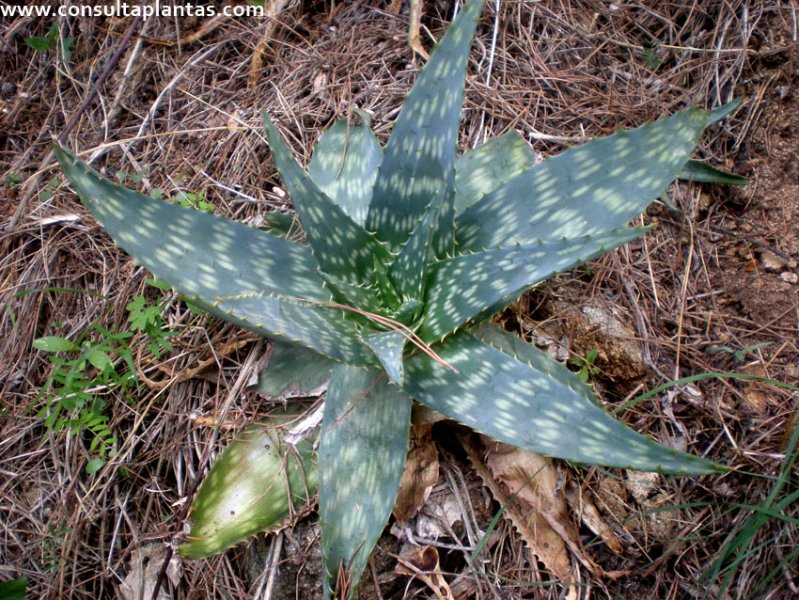 Aloe maculata 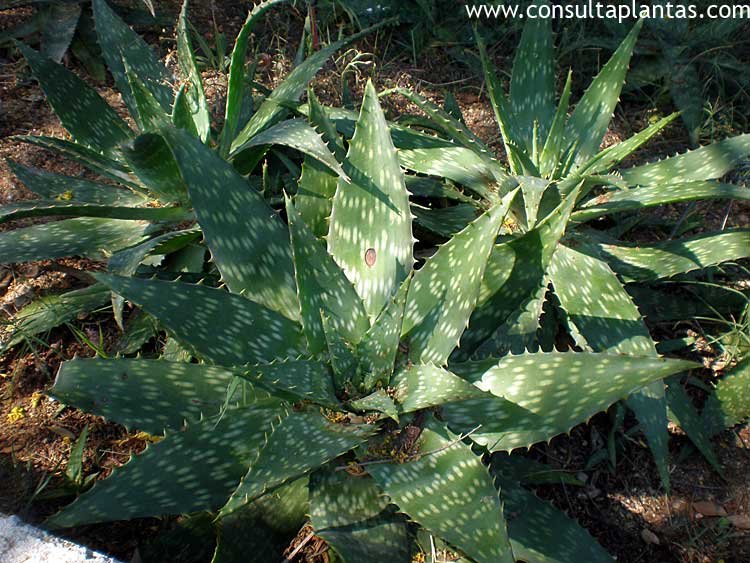 Aloe maculata 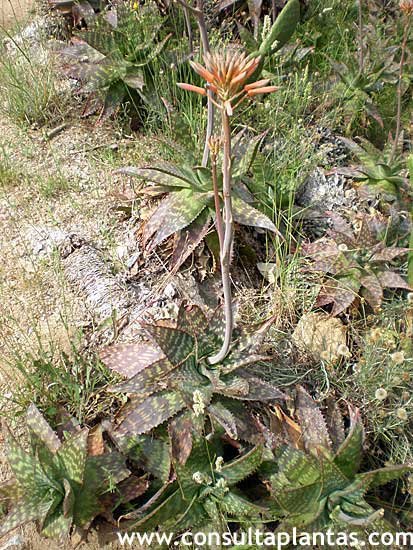 Aloe maculata 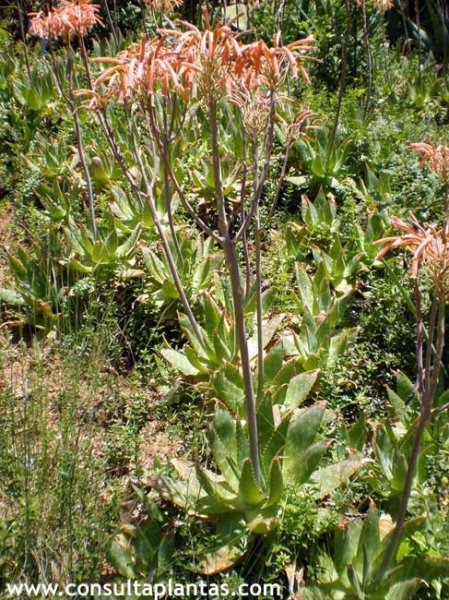 Aloe maculata 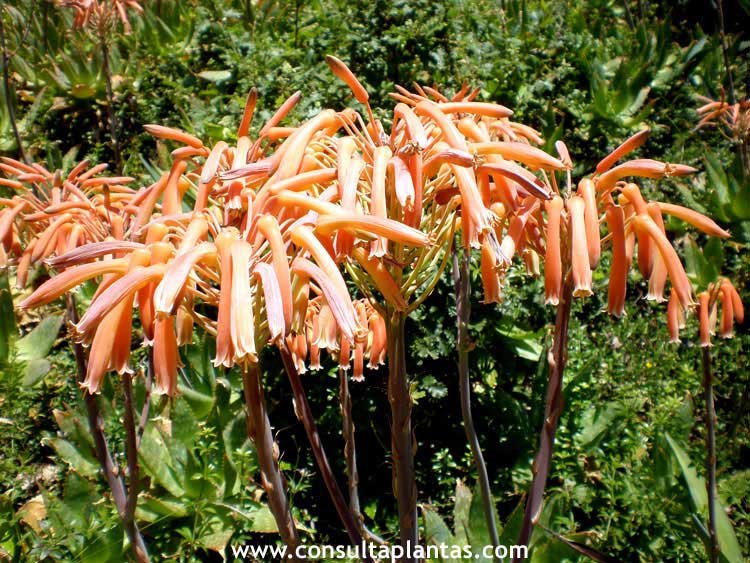 Aloe maculata 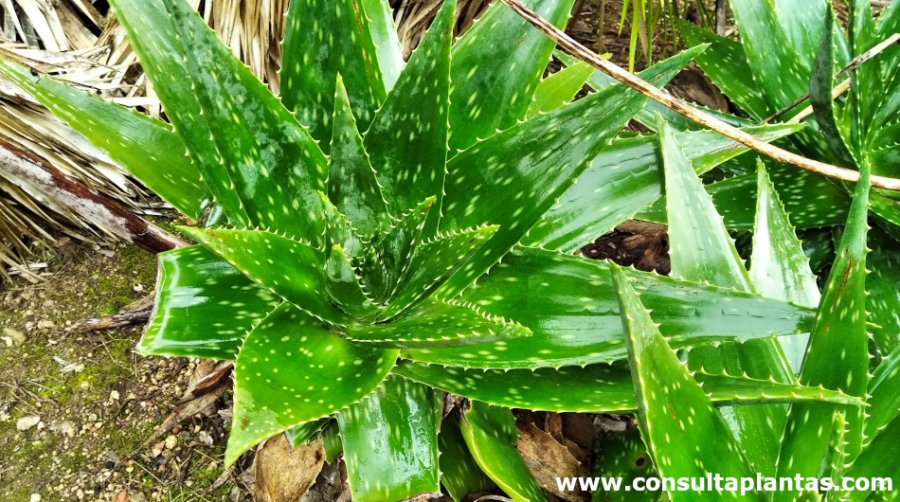 Aloe maculata 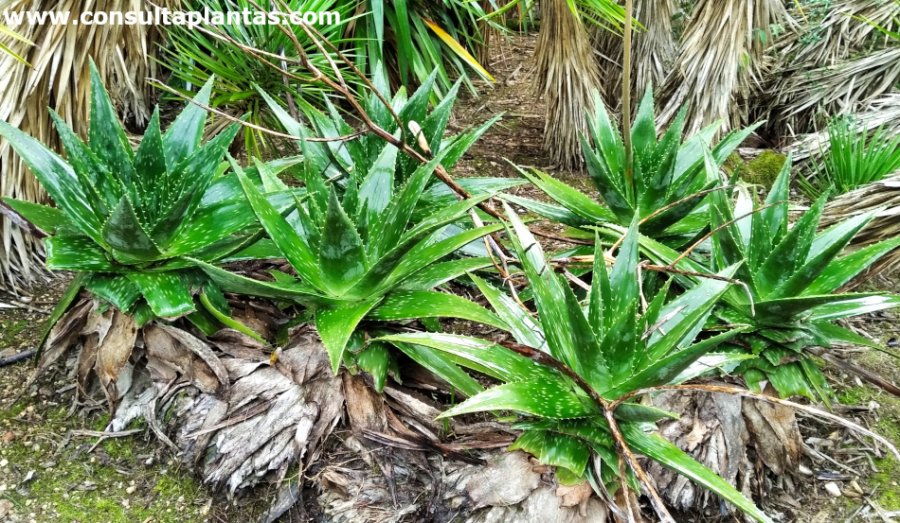 Aloe maculata |