

Care of the succulent plant Aloe aculeata or Red hot poker aloe |
|
The genus Aloe is included in the subfamily Asphodeloideae (family Xanthorrhoeaceae), which comprises about 500 species of succulent plants native to Africa, Madagascar and the Middle East. Some species are: Aloe aculeata, Aloe x caesia, Aloe pluridens, Aloe juvenna, Aloe variegata, Aloe aristata, Aloe striata, Aloe ciliaris, Aloe arborescens, Aloe vera, Aloe ferox, Aloe x spinosissima, Aloe mitriformis, Aloe marlothii, Aloe maculata, Aloe plicatilis, Aloe thraskii, Aloe barberae, Aloe tenuior, Aloe x delaetii, Aloe suprafoliata, Aloe esculenta. Common names: Red hot poker aloe, Prickly aloe. This species is native to South Africa. It is a succulent plant that forms a rounded rosette and reaches 60 cm (1.96 feet) in height. The leaves are long, light green with light spots and thorns on the margin and on the surface of the leaves. The flowers are tubular, yellow or orange in color and appear on floral stems that can branch. It blooms from the second half of spring to early summer. Red hot poker aloe is used to form groups, as isolated specimens, in rockeries and succulent plant gardens or in pots. Aloe aculeata prefers a semi-shade exposure; if grown in full sun it will take on reddish or orange hues. In winter it is better that the temperature does not drop below 5 ºC (41 ºF) but it can tolerate weak frosts. Soil for these plants can be a commercial cactus substrate to which coarse sand will be added. Water regularly in spring and summer, waiting until the soil has dried; from autumn, reduce watering until it is eliminated in winter. Fertilize with mineral fertilizer for cacti and succulents (low Nitrogen) once in spring and again in summer. It's advisable to prune the withered flowers. The greatest danger for this plant is the excess humidity that causes fungal diseases (fungi). Prickly aloe usually propagate from seeds sown in a sandy substrate; does not always produce suckers. |
Images of the succulent plant Aloe aculeata or Red hot poker aloe |
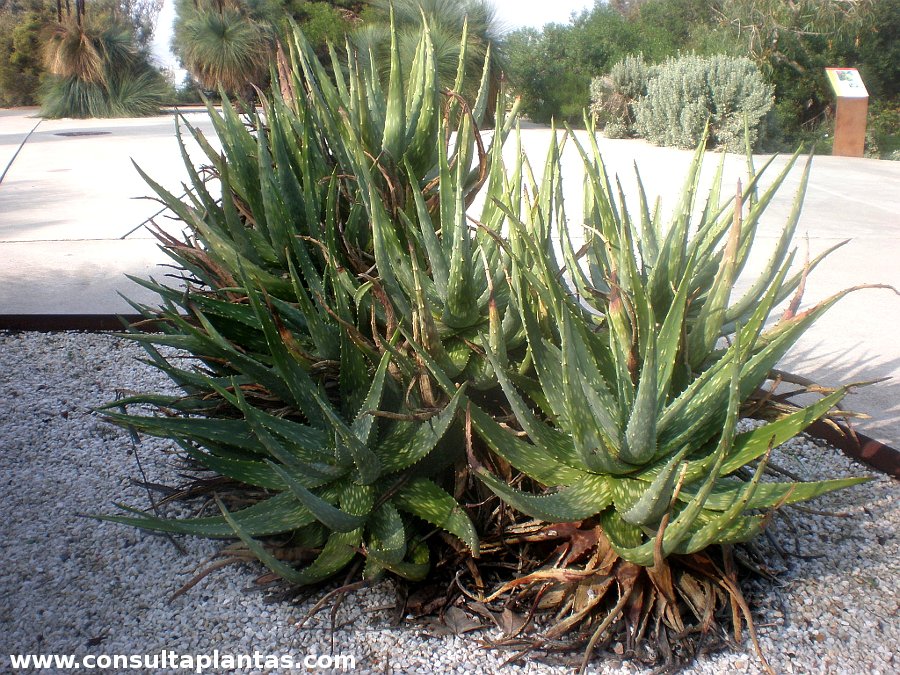 Aloe aculeata  Aloe aculeata 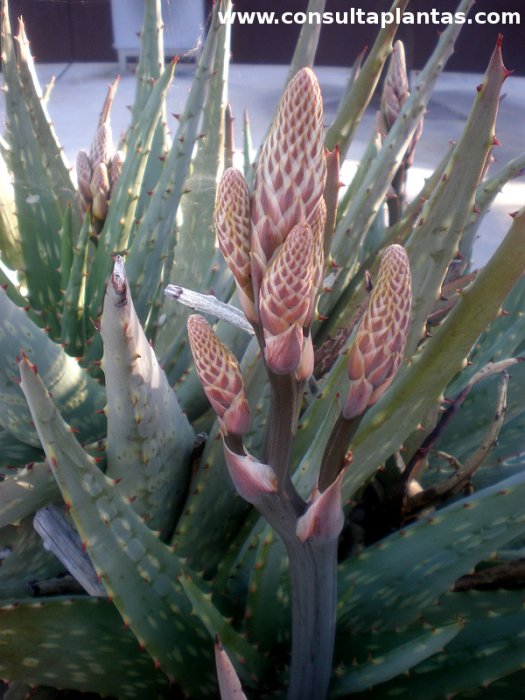 Aloe aculeata 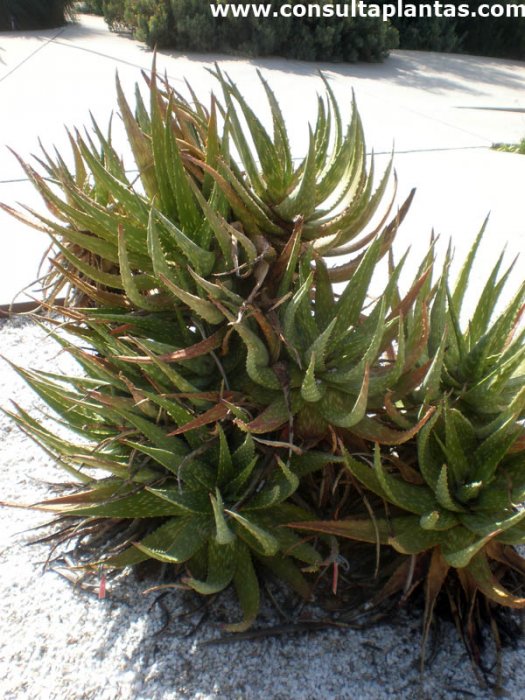 Aloe aculeata  Aloe aculeata |