

Care of the succulent plant Aloinopsis malherbei or Giant jewel plant |
|
The genus Aloinopsis, family Aizoaceae, comprises 15 species of small succulent plants native to South Africa. Some species are: Aloinopsis malherbei, Aloinopsis spathulata, Aloinopsis rubrolineata, Aloinopsis schooneesii, Aloinopsis broomii. Common name: Giant jewel plant. Scientific synonym: Nananthus malherbei. It is a small succulent plant that reaches 4 cm (1.57") in height but extends laterally. It has curious fleshy bluish-gray leaves and fan-shaped with "warty" tubers at their truncated apex. It produces flowers up to 2 cm (0.78") in diameter in yellow, light brown or salmon. It blooms from mid-winter to early spring. Due to its small size Giant jewel plant is usually grown in pots. It is also suitable for rockeries and slopes but protected from winter rains especially if they are abundant. Aloinopsis malherbei prefers full sun exposure but avoiding direct sun in the central hours of the Mediterranean summer. It could withstand light and occasional frosts. Nananthus malherbei prefers calcareous soils but a commercial cactus substrate with some coarse siliceous sand can be used. This plant grows in winter so it should be watered moderately, waiting for the soil to dry completely. The rest of the year water with the same dynamics. Fertilize once in spring with cactus mineral fertilizer diluted to half its usual dose. Pruning is not necessary. Aloinopsis malherbei does not present serious pest and disease problems if there is no excess irrigation; sometimes it can be attacked by mealybugs. Propagation is done by cuttings in spring or autumn or from seeds sown in spring. |
Images of the succulent plant Aloinopsis malherbei or Giant jewel plant |
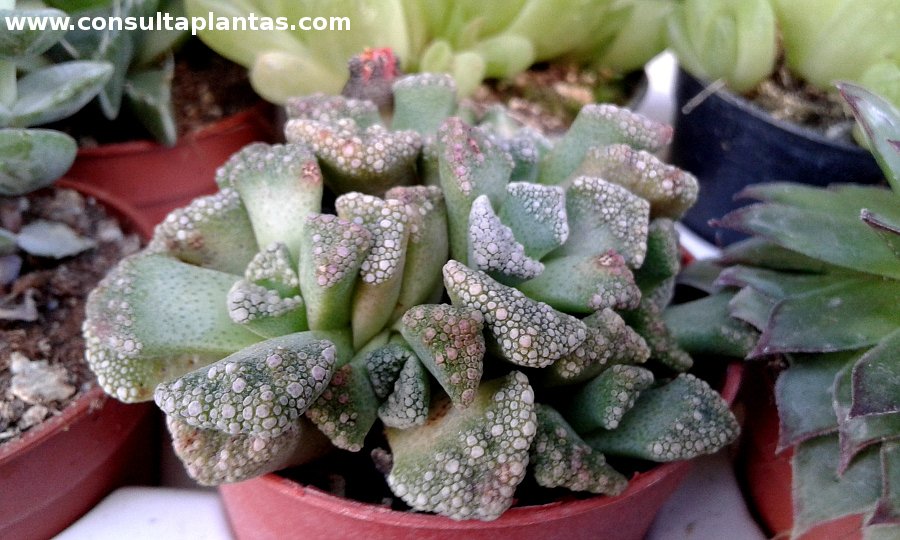 Aloinopsis malherbei 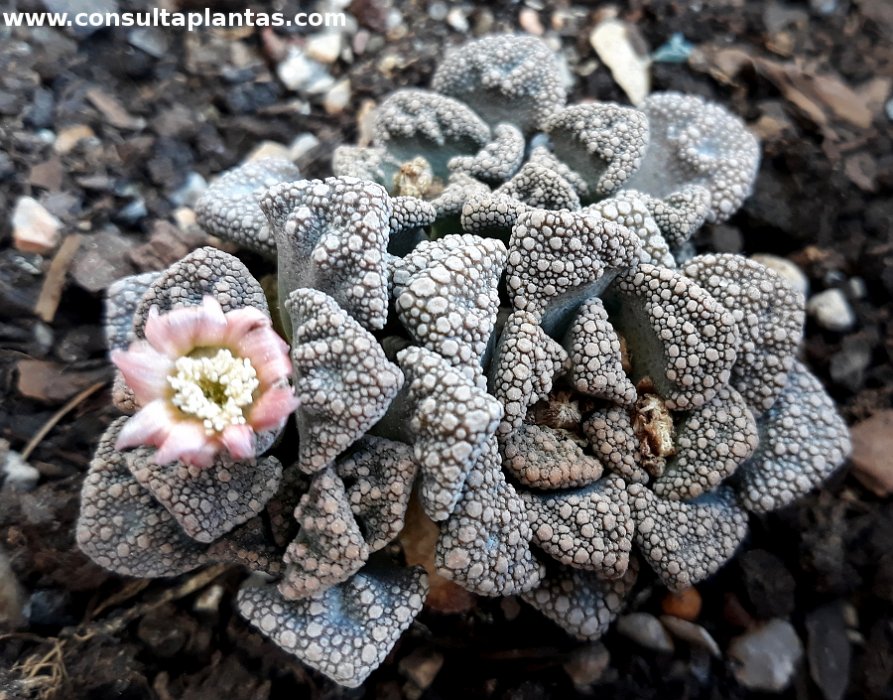 Aloinopsis malherbei 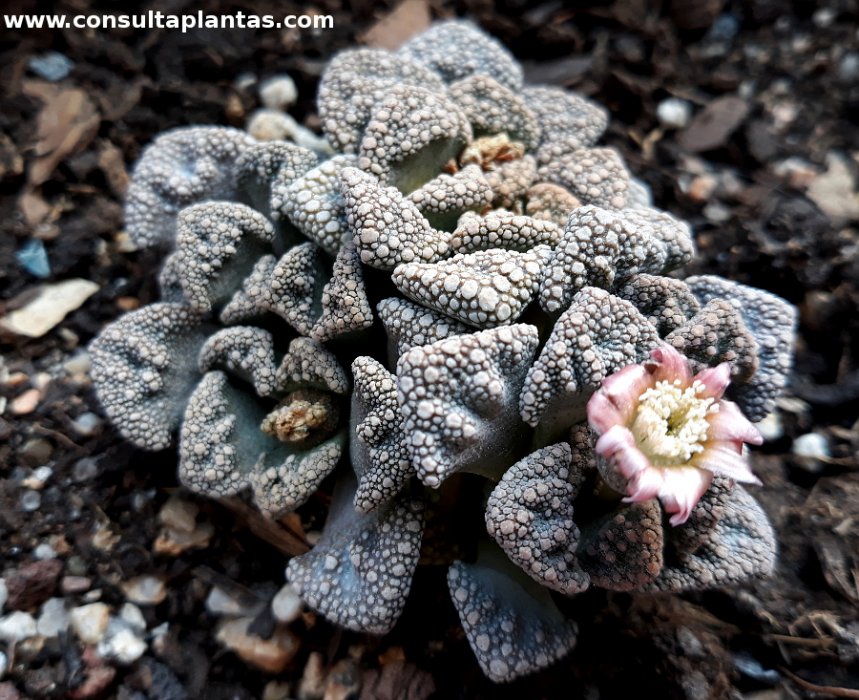 Aloinopsis malherbei 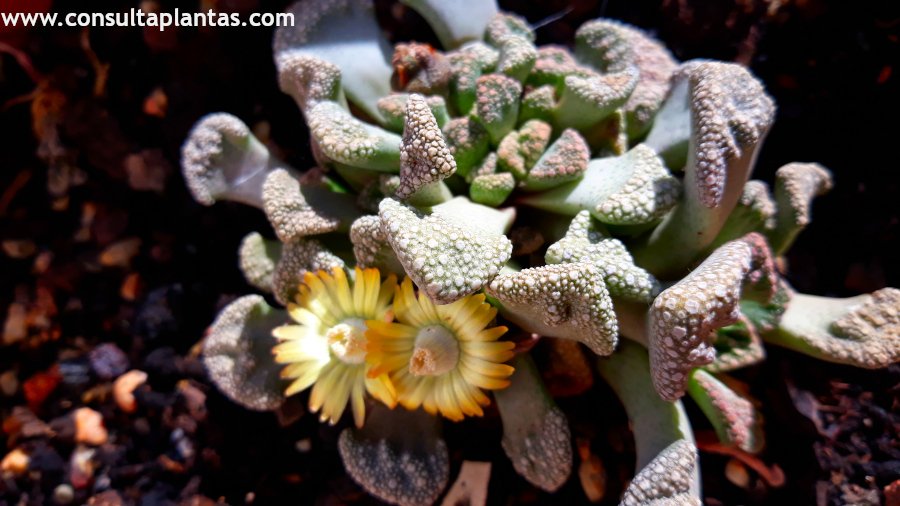 Aloinopsis malherbei 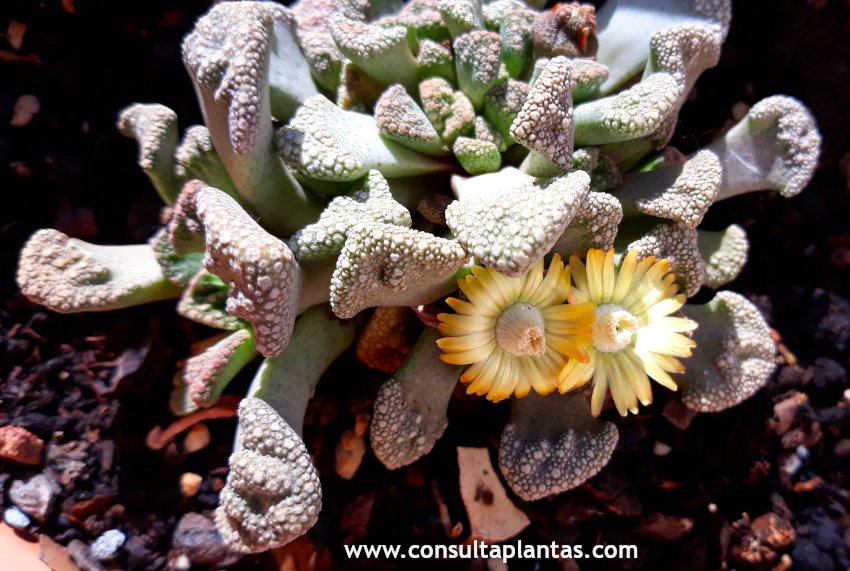 Aloinopsis malherbei  Aloinopsis malherbei |